


10+ Best Healthcare Website Design Agencies in Texas (2026 Guide)
Why Your Website Is Your Practice’s First Impression
Patients now research a provider online long before they ever call for an appointment. A cluttered layout, slow load time, or confusing navigation can cost a healthcare practice real patients, regardless of how good the care is. That’s why choosing the right partner for healthcare web design has become one of the highest-leverage decisions a clinic, hospital system, or wellness brand can make. The right team blends clinical credibility with modern UX, compliance, and conversion-focused strategy so your site actually turns visitors into booked patients.
To save you the research, we’ve put together a curated list of the best healthcare web design agencies in Texas, covering everything from full-service digital marketing shops to boutique firms that work exclusively with medical and wellness brands. Whether you’re a solo practitioner, a multi-location clinic, or a hospital network, this guide will help you find a healthcare website designer who understands both medicine and marketing.
What’s in This Guide
- What to look for in a healthcare web design
- Quick comparison table of the top agencies
- A self-assessment: does your website need a redesign?
- The 11 best agencies, reviewed
- Common website problems (and how to fix them)
What Makes a Great Healthcare Web Design Agency?
Not every web design agency understands the nuances of the medical field. Before hiring anyone, look for these five markers of real expertise:
- HIPAA-aware design & forms
Contact and intake forms should never expose protected health information to unsecured channels.
- Mobile-first, accessible layouts
Most patients search from a phone; your site should feel just as fast and clear there as on desktop.
- Proven results in healthcare, specifically
Look for case studies in medical, dental, wellness, or hospital verticals, not just generic small-business work.
- Built-in SEO and local visibility
A beautiful site that no one finds on Google isn’t generating new patients.
- Conversion-focused UX
Clear calls-to-action, easy appointment scheduling, and trust signals like provider bios and reviews.
Quick Comparison: Best Healthcare Web Design Agencies in Texas
|
Agency |
Location | Best For | Specialty |
|
Website iconix |
Texas (statewide) | Full-service healthcare web design + branding |
Design, SEO, branding, conversion strategy |
|
ITVibes |
Houston | Hospitals & multi-location clinics |
Web design, hosting, security |
|
Website Nations |
Houston / Austin | Independent doctors & clinics |
Custom medical websites |
|
Medivertical |
Dallas | SEO-driven practice growth |
Website design + local SEO |
|
Infinity Medical Marketing |
Texas (national reach) | Established medical practices |
Web design + full-service marketing |
|
Texas Medical SEO |
Texas (statewide) | Specialty practices (surgery, med spas) |
Web design + niche medical SEO |
|
True Digital Marketing |
Houston | Budget-conscious clinics |
Web design + reputation management |
|
Agency Partner Interactive |
Dallas | Custom web & app development |
Web development, e-commerce |
|
DBS Interactive |
Statewide | Large healthcare systems |
Enterprise UX + accessibility |
|
SearchX |
Statewide | Content-driven organic growth |
SEO + blog content strategy |
| Funnel Boost Media / Sagapixel |
Statewide |
Local visibility & PPC |
Local SEO, PPC, web design |
Quick Self-Assessment: Does Your Website Need a Redesign?
Answer honestly. If you check three or more boxes below, it’s time to talk to a specialist.
- Your website takes more than 3 seconds to load on mobile
- Patients can’t book an appointment in under 60 seconds
- Your site hasn’t been redesigned in the last 3 years
- You don’t show up on page 1 for your city + specialty
- Your contact forms aren’t clearly HIPAA-conscious
- You have no patient reviews, testimonials, or trust badges on the homepage
If several of these sound familiar, it’s worth working with healthcare website design experts who can diagnose exactly where your site is losing patients, not just repaint the homepage.
The 11 Best Healthcare Web Design Agencies in Texas
1. Website iconix

Website Iconix is a full-service Healthcare Web Design and branding studio built specifically for medical and wellness businesses. Rather than applying a generic small-business template to a clinic’s site, the team starts by mapping the actual patient journey, from the first Google search, through the homepage, into a booking form, and designs every screen around reducing friction at each step. That process typically includes a discovery phase to understand a practice’s specialties and service lines, wireframing focused on mobile-first navigation, custom design (not a recycled theme), and a technical SEO foundation built in from the start rather than bolted on afterward.
What sets the studio apart from many single-service vendors is that it also operates as a best branding agency for health and wellness businesses, meaning logo, color system, tone of voice, and messaging are developed alongside the website rather than treated as a separate project. For a multi-location practice or a wellness brand launching a new service line, that means the same visual identity carries cleanly from the homepage to email campaigns to printed signage in the waiting room. Ongoing support after launch, performance monitoring, content updates, and conversion-rate testing are also part of the standard engagement, which makes Website iconix a strong fit for practices that want a long-term digital partner rather than a one-time build.
2. ITVibes
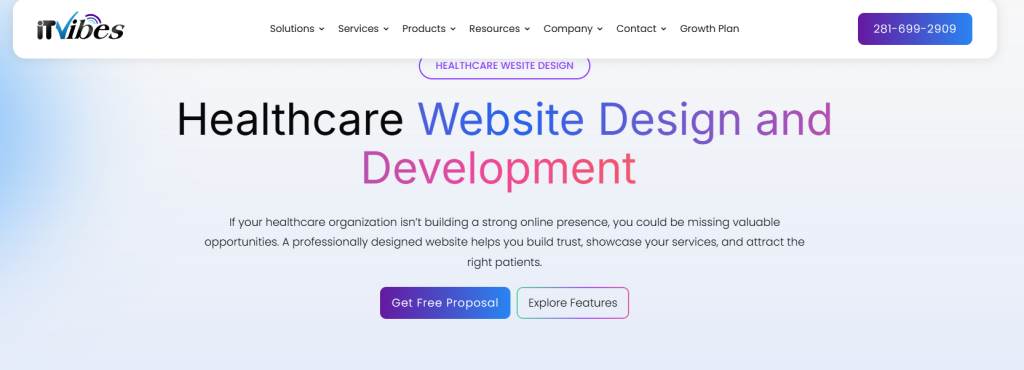
ITVibes is a Houston-based agency with more than a decade of experience designing for hospitals, multi-specialty groups, and larger healthcare organizations. Their service list is broad: website design, logos and branding, content, paid media, hosting, SEO, analytics, and security, which appeals to health systems that would rather manage one vendor relationship than coordinate five separate contractors. According to the agency’s own published timelines, a typical build that includes patient engagement tools and appointment scheduling takes roughly 8–10 weeks from kickoff, which is useful context when a hospital marketing team is planning a launch around a specific date.
Because ITVibes works across hospitals, pharmaceutical-adjacent brands, and healthcare technology companies, its portfolio tends to skew toward larger, more complex builds involving multiple departments, provider directories, and compliance requirements. Smaller independent practices can still work with the team, but the agency’s real strength shows up on projects where a website has to serve several very different audiences: patients, referring physicians, and internal staff at the same time.
3. Website Nations
 Website Nations focuses specifically on medical and healthcare website design across Houston, Austin, Spring, Kingwood, and The Woodlands. The agency’s positioning is built around a simple idea: healthcare websites are not standard business websites, and they need to be mobile-responsive, HIPAA-conscious, and fast by default rather than as an afterthought. Every project is customized to the practice’s specialty and branding rather than pulled from a shared template library, and ongoing maintenance is offered after launch so a site doesn’t quietly go stale a year later.
This makes Website Nations a solid option for a healthcare website designer search when the client is an independent physician, a small group practice, or a single-location clinic that wants a custom-built site without the overhead of an enterprise agency. The team’s regional focus on the Houston and Austin metro areas also means they tend to have a strong working knowledge of local search competition in those specific markets.
4. Medivertical
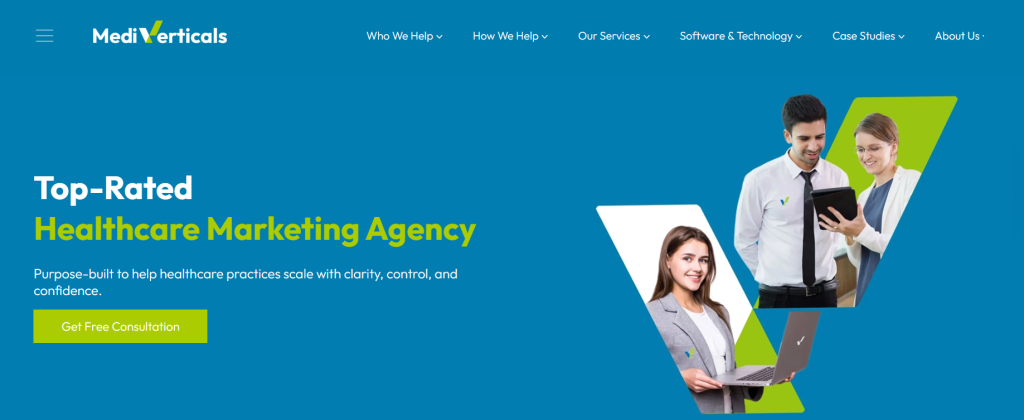
Based in Dallas, Medivertical positions itself as a healthcare website design agency built around a dual goal: visually appealing design and strong performance in local search. Rather than treating SEO as a separate add-on service, the agency bakes on-page optimization, content strategy, and geo-targeting into the build process itself, with the explicit aim of helping a practice’s site rank for the specific city-plus-specialty searches patients actually use.
Post-launch, Medivertical also offers ongoing monitoring so sites stay secure and technically current, freeing clinical staff from having to think about software updates or broken plugins. For a practice that’s less concerned with flashy visuals and more focused on converting search traffic into new-patient inquiries, Medivertical’s SEO-first approach to website design makes it worth a serious look.
5. Infinity Medical Marketing
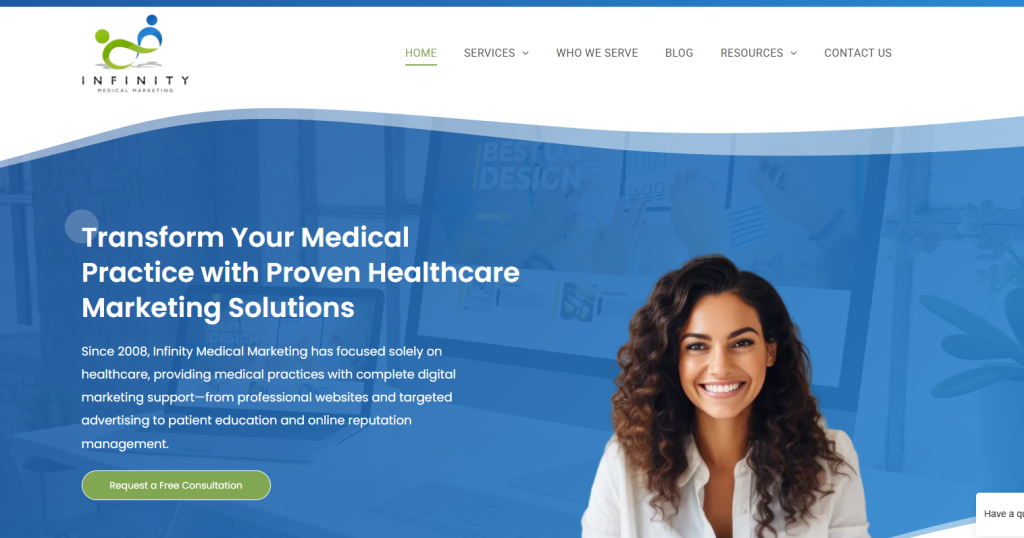
Infinity Medical Marketing has been serving healthcare organizations and medical practices since 2008, which gives it one of the longer track records on this list. The agency bundles website design and development with broader marketing services, paid search, social, and reputation management among them, so an established practice can consolidate its entire digital marketing stack under one contract instead of managing separate vendors for each channel.
That breadth is the agency’s main selling point: a practice that already has a functional website but wants a partner to manage ongoing campaigns, content, and performance reporting will likely get more value here than a brand-new clinic that just needs a first website built from scratch. The trade-off is that a bundled, full-service relationship is typically a bigger commitment, both in scope and in budget, than a single web design project.
6. Texas Medical SEO
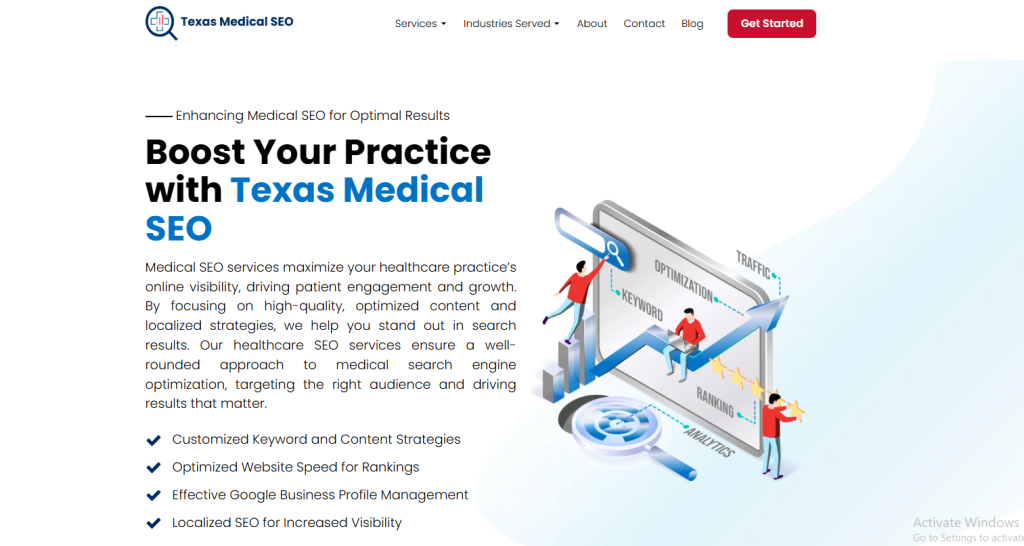
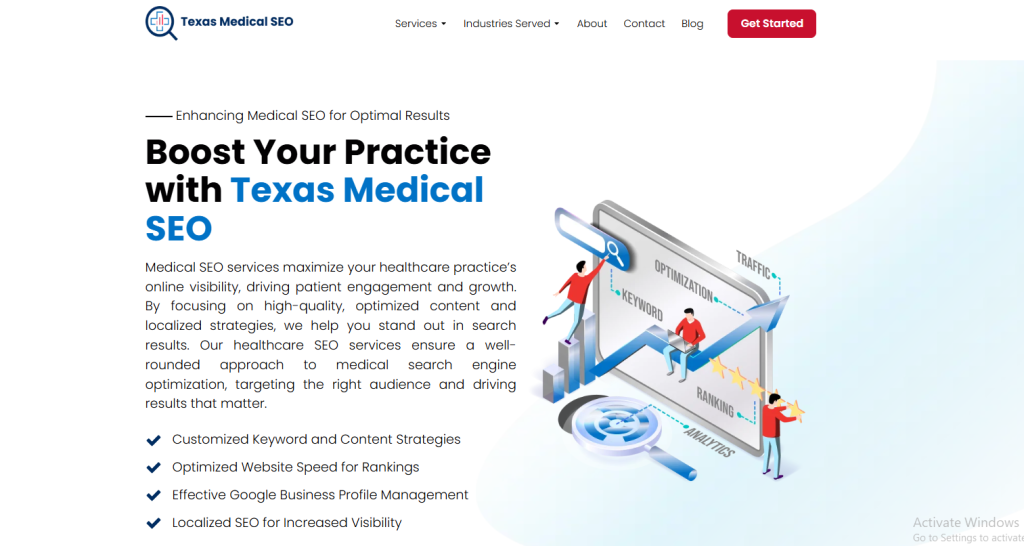
Texas Medical SEO leans heavily into specialty verticals, plastic surgery, dermatology, medical spas, and other elective or highly competitive fields where ranking for a handful of high-value keywords can make or break a practice’s growth. The agency builds its websites around a project roadmap that pairs tailored design with optimized content, secure patient portals, and appointment scheduling, all framed around what the agency calls meeting both user and search-engine requirements at once.
For practices operating in a crowded specialty market, working with healthcare website design experts who already understand the specific keyword competition in that field can shortcut a lot of trial and error. Texas Medical SEO’s content library and case studies suggest a team that spends as much time thinking about search intent as it does about layout, worth prioritizing if organic visibility is the practice’s biggest current gap.
7. True Digital Marketing
True Digital Marketing, based in Houston, is generally positioned as a more affordable entry point into healthcare-focused web design without sacrificing the fundamentals: mobile responsiveness, SEO optimization, and attention to compliance and patient data protection. Alongside the website itself, the agency also offers reputation management and content marketing, both of which matter for smaller practices trying to build credibility from a limited starting point.
This combination tends to suit newer practices, solo providers, or clinics that are building their first serious online presence and need transparent, cost-effective solutions rather than an enterprise-level engagement. It’s a reasonable starting point for a practice that expects to grow into a larger marketing relationship over time, rather than needing one on day one.
8. Agency Partner Interactive
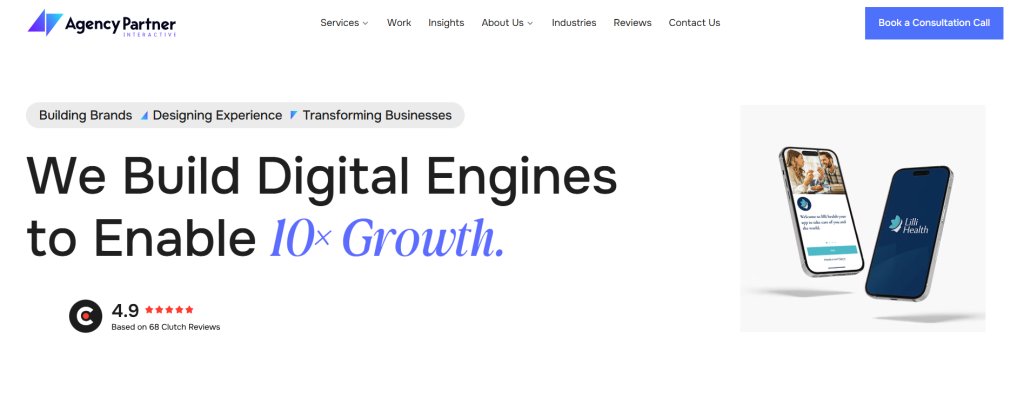
Agency Partner Interactive is a Dallas-based, Dallas 100 Award-winning shop that has worked with more than 800 organizations, with healthcare and medical device companies among its client base. Where this agency really differentiates itself is custom development, patient portals, e-commerce functionality, and mobile app-like experiences that go well beyond a standard content-managed website. Their process is built around Agile sprints, which suits larger or more technically ambitious projects where requirements are likely to evolve during the build.
Because the agency also serves clients well outside healthcare, it’s frequently listed among broader digital marketing agencies in Texas rather than as a pure medical specialist. That’s worth knowing going in: a practice hiring Agency Partner Interactive is getting strong technical development chops, but should expect to bring more of the healthcare-specific context and compliance requirements to the table itself.
9. DBS Interactive
DBS Interactive brings more than 20 years of experience to enterprise-level healthcare projects, and its portfolio includes redesigning platforms for home-care networks spanning a dozen states and 190-plus locations, as well as skilled nursing facility groups with 60-plus locations across Texas. That scale of work points to the agency’s real strength: designing a single site architecture that can serve patients, physicians, providers, and administrators simultaneously without becoming confusing for any one of those audiences.
Accessibility and HIPAA-conscious security are treated as first-class requirements rather than checklist items, and the agency’s own materials emphasize intuitive navigation, mobile responsiveness, and streamlined appointment forms as the core UX elements that reduce friction for patients. For a large healthcare system or a multi-facility organization evaluating vendors, DBS Interactive’s experience at scale is a meaningful differentiator over agencies that mostly build single-location practice sites.
10. SearchX

SearchX takes a content-first approach to healthcare marketing, building out keyword research and ongoing blog content alongside the website itself rather than treating content as an afterthought once the design is finished. In published case studies, the agency describes producing informative blog posts tailored to patient questions, optimizing on-page SEO, and using internal linking to improve both navigation and search performance for healthcare clients.
For a practice evaluating the Best Healthcare Website Development Agencies primarily through the lens of long-term organic growth, rather than a one-time redesign, SearchX’s emphasis on continuous content production is a meaningful differentiator. This model tends to pay off over a longer horizon (think six months to a year) rather than delivering an immediate spike in traffic right after launch.
11. Funnel Boost Media & Sagapixel
Funnel Boost Media and Sagapixel are grouped together here because they solve a similar problem from slightly different angles: getting a healthcare practice visible in local search results fast, not just eventually. Funnel Boost Media specializes in local website design, SEO, and PPC aimed at helping businesses rank at the top of search engines and generate a measurable return on ad spend. Sagapixel, meanwhile, works across the healthcare spectrum, from local providers to venture-backed health tech companies to well-known national healthcare brands, combining web design with a dedicated local and organic SEO strategy.
Both agencies are a strong fit for practices in competitive metro areas, think Dallas-Fort Worth, Houston, or Austin, where showing up in the local Google Maps pack matters just as much as ranking on the standard organic results page. If a practice’s biggest challenge is being found by nearby patients right now, rather than a slow-building organic strategy, this pairing of local SEO and paid visibility is worth evaluating.
Healthcare Web Design Specialists vs. General Digital Marketing Agencies
Not every project needs a healthcare-only specialist. Broader digital marketing agencies in Texas can be a good fit if you also need paid ads, e-commerce, or multi-industry experience, but they may lack familiarity with healthcare compliance nuances, patient-journey UX, or medical terminology. A specialist agency, by contrast, already understands what builds trust with patients and what a compliance team will flag before it becomes a problem.
As a rule of thumb: choose a specialist for the website itself, and consider a generalist only for supplementary channels like paid social or display advertising.
Looking for Branding, Not Just a Website?
Website design is only part of the picture. If your logo, color palette, and messaging feel inconsistent across channels, it may be worth searching specifically for the best branding agency for health and wellness businesses rather than a pure web design shop. A strong brand identity makes every future website redesign faster, cheaper, and more cohesive.
Common Healthcare Website Problems and How to Fix Them
Problem: Slow load times on mobile
Fix: Compress images, use a lightweight CMS theme, and enable browser caching. Aim for under 2.5 seconds on 4G.
Problem: Low appointment-form conversions
Fix: Shorten forms to 4–5 fields, add a visible phone number, and place the booking button above the fold.
Problem: Poor local search rankings
Fix: Claim and optimize your Google Business Profile, build location-specific landing pages, and earn patient reviews consistently.
Problem: Non-compliant contact forms
Fix: Use encrypted, HIPAA-conscious form providers and avoid collecting sensitive health details through standard contact forms.
Problem: Outdated, generic design
Fix: Invest in real photography of your team and space, and avoid stock imagery that patients now recognize instantly.
Problem: No clear differentiation between providers or locations
Fix: Give every provider a dedicated bio page with credentials, specialties, and a direct booking link, and give every location its own landing page optimized for that city or neighborhood rather than one generic ‘locations’ list.
Problem: Analytics that no one actually looks at
Fix: Connect a simple dashboard tracking form submissions, click-to-call events, and scheduling-widget completions, then review it monthly. A site redesign without a measurement plan makes it impossible to know whether the investment actually paid off.
Final Thoughts
The best healthcare website development agency won’t just make your site look better; it will turn more visitors into booked patients. Whether you choose a boutique specialist or a larger full-service partner, prioritize proven healthcare experience, mobile performance, and SEO fundamentals over design trends alone.
Start by narrowing the list using the criteria and comparison table above, then request a short discovery call with two or three finalists. Ask each one for case studies from practices similar in size and specialty to yours, and ask specifically how they handle HIPAA-conscious forms and post-launch support; the answers tend to reveal a lot about how the actual engagement will go.
If you’re ready to start that conversation, the team at Website Iconix is happy to walk through a free site audit and show you exactly where your current website is falling short, and what a redesign built around your specific patient journey could look like.

