
This Amazon PPC guide covers everything from the basics of how Amazon's ad platform operates to the advanced strategies that experienced sellers use to stretch every dollar. Whether you are launching your first product or trying to fix campaigns that are bleeding money, you will find something useful here.
Get Started Now
What is Amazon PPC? Amazon PPC stands for pay-per-click advertising. It is Amazon's internal advertising system that allows sellers to promote their products directly on the platform. The model is simple: your ad appears in front of shoppers, and you only pay when someone actually clicks on it. If a thousand people see your ad but nobody clicks, you owe nothing.
The fee you pay for each click is called the Cost Per Click (CPC). This number varies depending on how competitive your product category is and how many other sellers are bidding on the same search terms.
Think of it this way. Amazon is essentially a giant shopping mall with hundreds of millions of visitors every day. Without advertising, your product might be sitting in a quiet corner that nobody walks past. PPC advertising moves you to the front entrance, right where the foot traffic is heaviest.
A few years ago, sellers could grow organically through good listings and word of mouth. That window has largely closed. Today, Amazon's marketplace is more crowded than ever, and the algorithm heavily favors products that are already selling well, which creates a chicken-and-egg problem for anyone launching something new.
Here is what the numbers look like. According to Amazon's Small Business Empowerment Report, US independent sellers moved over 5 billion items in 2025 alone. That works out to roughly 8,600 items sold every single minute. And over 60 percent of those sales came from independent sellers, most of them small and medium-sized businesses.
The opportunity is enormous. But so is the competition. Running well-structured Amazon PPC campaigns gives smaller brands a fighting chance by placing them directly in front of shoppers who are already ready to buy.
Here is what a well-managed campaign actually does for your business:
Not every ad format serves the same purpose. Choosing the right one depends on what you are trying to accomplish.
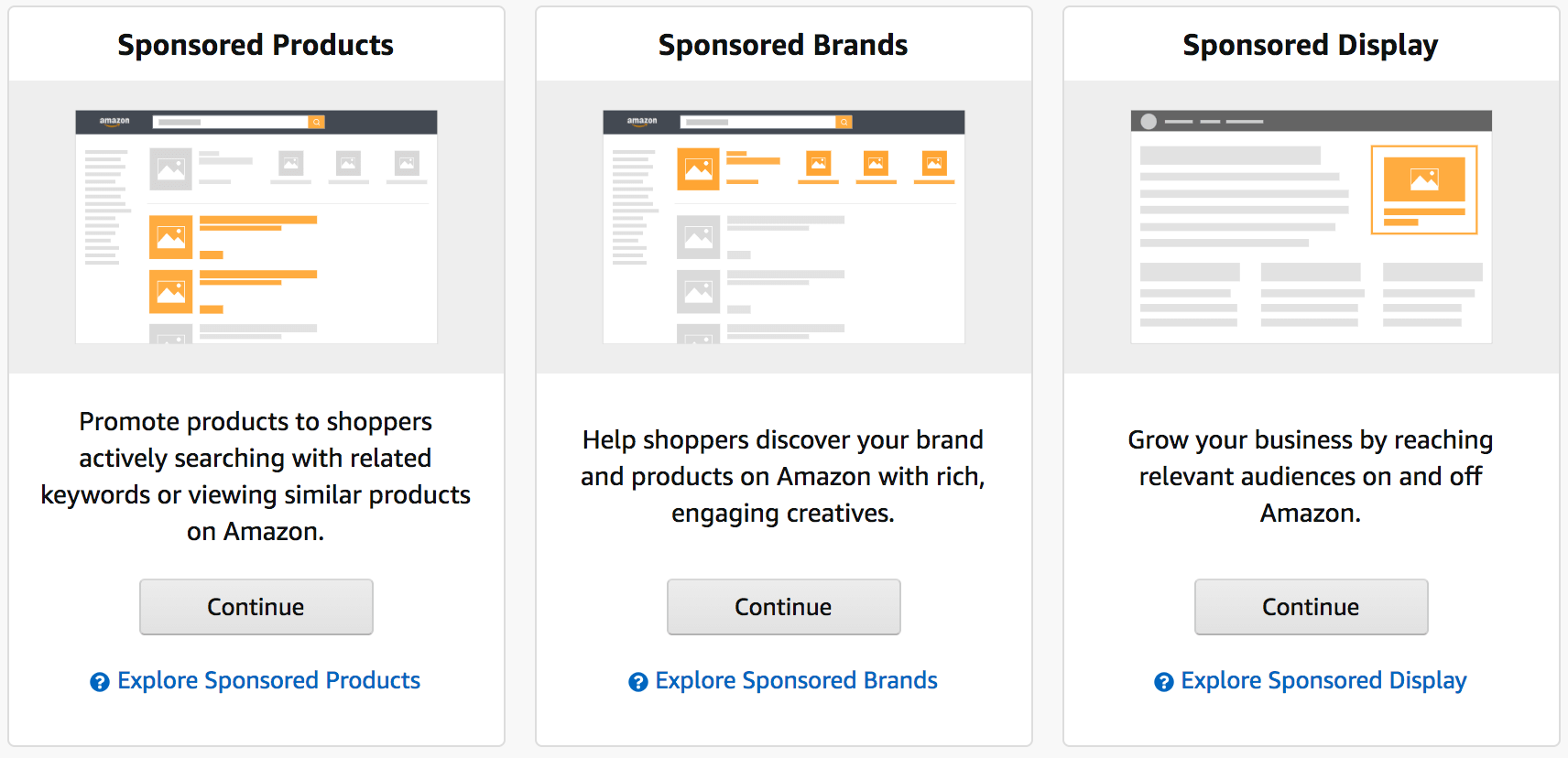
These are the most widely used ad formats on Amazon, and for most sellers, they are the best place to start. Sponsored Product Ads promote individual product listings and appear directly within search results, blending naturally with organic listings. Shoppers often cannot immediately tell the difference, which makes these ads particularly effective.
You have two options for targeting:
When to use them: Sponsored Product Ads are ideal for launching a new product, increasing visibility in a crowded category, or pushing slow-moving inventory that needs a sales boost.
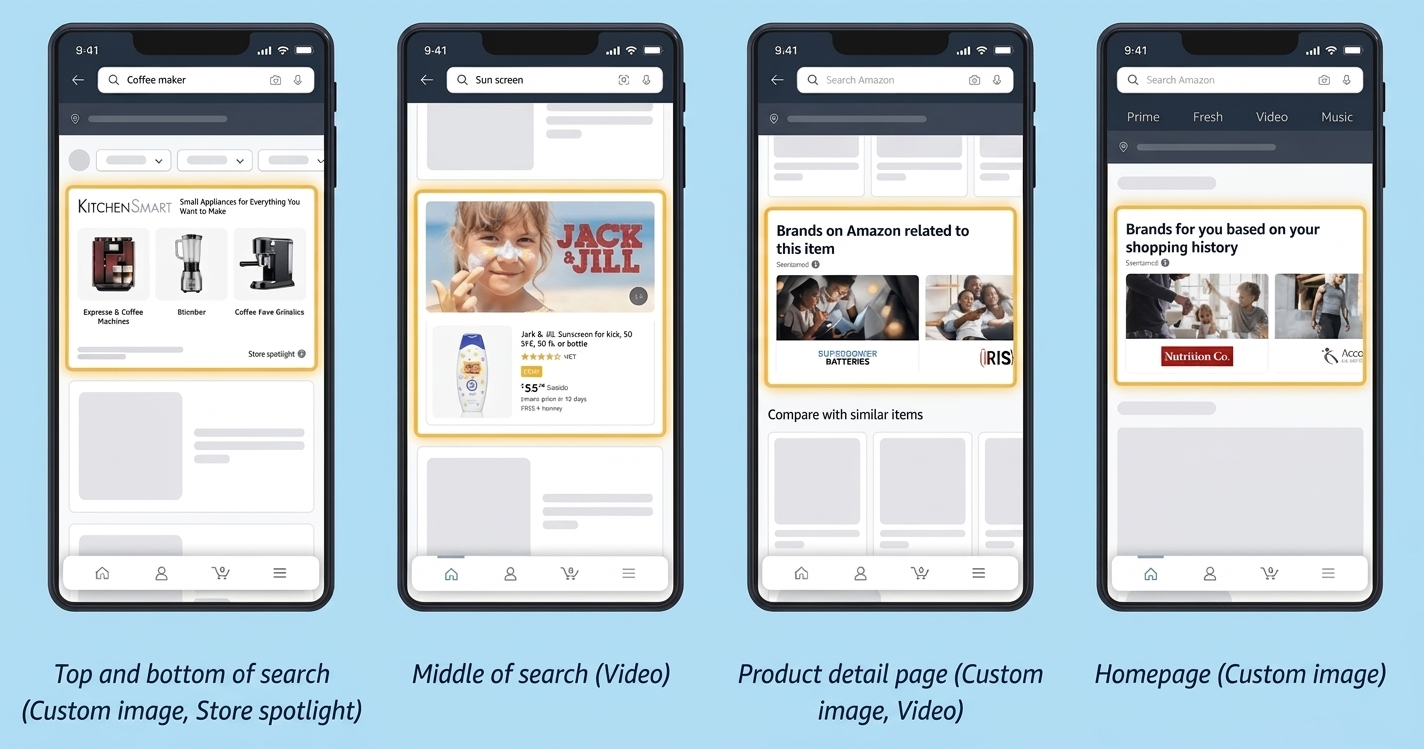
Sponsored Brand Ads are designed for brand building rather than individual product promotion. They appear at the very top of search results and include your brand logo, a custom headline, and a selection of products.
There are three formats to choose from:
When to use them: These ads shine during product line promotions, seasonal campaigns, or any time brand recognition is a priority alongside direct sales.
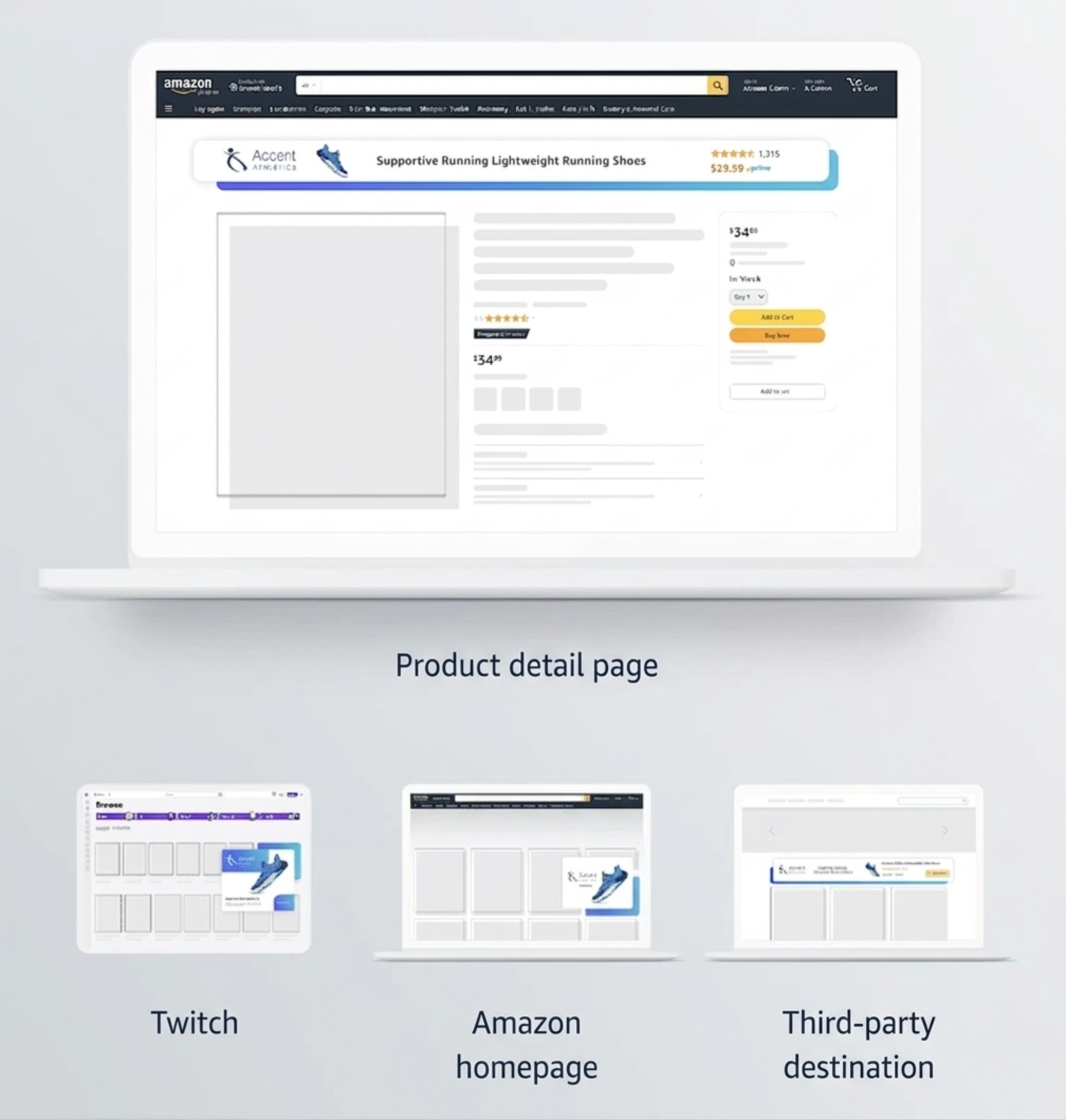
Sponsored Display Ads are the most flexible format because they can appear both on and off Amazon. They follow shoppers based on their browsing behavior, so if someone viewed your product but left without buying, your ad can reappear to them later on Amazon, on third-party websites, or inside apps.
This makes them especially powerful for retargeting. A shopper who has already shown interest in your product is far more likely to convert than someone encountering it for the first time.
When to use them: Retargeting campaigns, expanding your reach beyond Amazon, and promoting products that naturally complement something a shopper recently purchased.
Running ads without understanding your numbers is one of the fastest ways to drain your budget. Whether you are managing things yourself or working with an Amazon PPC management services provider, these are the metrics every seller needs to monitor consistently.
Impressions count how many times your ad was displayed to shoppers. Deep impressions mean your ad is getting visibility, but impressions alone do not mean anything unless they lead to clicks and purchases.
Every time someone taps your ad, that counts as a click. More clicks generally indicate that your ad creative and targeting are relevant. But clicks without purchases point to a problem on your product page.
This is what you pay each time someone clicks.
Formula: CPC = Total Ad Spend ÷ Total Clicks
Keeping your CPC reasonable is critical for maintaining a healthy return. A high CPC in a low-margin category can make profitability nearly impossible.
CTR tells you what percentage of people who saw your ad actually clicked on it.
Formula: CTR = (Clicks ÷ Impressions) × 100
A low CTR usually means your ad is not resonating, with either the image, the headline, or the targeting. Industry averages vary, but anything below 0.3 percent is worth investigating.
ACoS is the metric most sellers focus on when measuring ad efficiency.
Formula: ACoS = (Ad Spend ÷ Attributed Sales) × 100
A lower ACoS means you are spending less to generate each dollar of revenue. For established products, most experienced sellers aim to keep ACoS between 20 and 35 percent. During a product launch, a higher ACoS is acceptable because visibility and sales velocity matter more than immediate profit.
RoAS is the flip side of ACoS; it tells you how much revenue you are generating for every dollar spent on advertising.
Formula: RoAS = Attributed Sales ÷ Ad Spend
A RoAS above 1 means you are making more than you spend. The higher the number, the more efficient your campaigns are.
TACoS is the metric that separates beginners from experienced sellers, and it is arguably the most important number on this list.
Formula: TACoS = (Total Ad Spend ÷ Total Revenue) × 100
The key difference between ACoS and TACoS is what goes in the denominator. ACoS only looks at revenue generated directly from ad clicks. TACoS measures your ad spend against your entire revenue, including organic sales.
Why does this matter? Because if your TACoS is steadily decreasing while your total sales are growing, it means your PPC investment is building genuine organic momentum; shoppers are starting to find you without needing a paid placement. If your TACoS is flat or rising, your ads may be propping up sales that are not becoming self-sustaining.
This single metric tells you whether you are building a business or just renting visibility.
Every successful campaign starts with strong keyword research, and applying the right Amazon PPC tips from the beginning can save you weeks of wasted spend. Begin with your own product knowledge.
Ask yourself what terms a shopper would realistically type when looking for what you sell. If you sell a bamboo cutting board, someone might search “eco-friendly cutting board,” “sustainable kitchen accessories,” or “bamboo board for meal prep.”
From there, use tools like Helium 10, Jungle Scout, or Ahrefs to go deeper. These platforms can surface search terms you would never think of on your own, along with data on search volume and competition level.
Pay special attention to three keyword categories:
A great keyword list is only half the equation. The other half is knowing how to bid, when to scale, and what to pull back. A sound Amazon Pay-Per-Click strategy starts with separating your campaign types, automatic campaigns for discovery and manual campaigns for precision, and treating each with a different goal.
Use automatic campaigns during launch to gather data. After three to four weeks, pull your search term report and identify which terms converted at a profitable rate. Migrate those into manual campaigns with tightly controlled bids. Keep the automatic campaign running at a lower budget as an ongoing discovery engine, feeding new ideas into your manual campaigns over time.
For bidding, avoid the temptation to either underbid out of caution or overbid out of aggression. Start at the suggested bid Amazon provides, give it two weeks of data, then adjust based on actual ACoS performance for each keyword individually.
This is one area where most existing guides are completely silent, and it represents one of the biggest shifts in how Amazon works in 2026. Amazon’s AI shopping assistant, Rufus, rolled out broadly in late 2025. Unlike traditional keyword matching, Rufus reads listings the way a human would and answers conversational shopping questions.
A shopper might ask Rufus, “What is the best face moisturizer for oily skin in a humid climate?” and Rufus will scan listings for content that actually addresses that question. This makes Amazon PPC optimization inseparable from listing quality; the two are now deeply connected in ways they were not before.
Write your listings as if you are answering the most common questions your customers have. Think about what objections or concerns they bring to the purchase decision, and address those directly in your copy. Bullet points and product descriptions written purely as keyword lists will perform worse than listings written in natural, informative language.
Your competitors’ keyword strategies are one of the most underused sources of intelligence available to Amazon sellers. This kind of competitive analysis is something a good Amazon PPC consultant will do during any account audit, and it is something you can start doing yourself right now.
Start by typing your main product keyword into Amazon’s search bar and noting the autocomplete suggestions. Then look at the top listings in your category manually. The words that appear in their titles, bullet points, and descriptions are strong indicators of which keywords Amazon’s algorithm associates with that product type.
Tools like Helium 10’s Cerebro allow you to reverse-engineer competitor listings and see exactly which search terms they are indexed for. Amazon Brand Analytics, available to Brand Registry members, goes even further by showing which keywords are driving the most clicks and purchases across entire product categories.
Look at the sponsored ads that appear when you search your target keywords. If the same competitor keeps appearing, they are likely bidding heavily on those terms, which tells you both that the keyword is worth targeting and that you will need a competitive bid to show up alongside them.
Most sellers know they should test their ads, but the scope of testing is often too narrow. This is an area where working with professional Amazon PPC advertising services can accelerate learning significantly, but it is also something you can build into your own process.
A/B testing means running two versions of something simultaneously and measuring which performs better before committing to either. The rule is to change only one variable at a time.
Example test for a supplement brand:
Run both versions for at least two to three weeks and let the data decide. In one real case, a private-label supplement seller tested two headlines and found that Version B produced a 34 percent higher CTR, which dropped their ACoS from 41 percent down to 27 percent.
Pro Tip for 2026: Do not limit your testing to text. With Sponsored Brands, video is growing in importance. Testing the first three seconds of your video, the hook, has a significantly higher impact on RoAS than adjusting your bid by small increments.
Your ad does one job: get the click. After that, your listing has to close the sale. A beautifully managed campaign pointing to a weak listing is money thrown away.
Images are where most shoppers form their first impression. Use high-resolution photos that show the product from multiple angles. Include at least one lifestyle image showing the product being used in a real context. Use infographic-style images to visually communicate key features, dimensions, materials, and what is included in the package.
Titles should lead with your brand name, include your primary keyword naturally, and call out the most important feature or use case. Keep it readable; a title that is just a string of keywords looks spammy and performs poorly.
Bullet points should each lead with a benefit, not a feature. “BPA-free stainless steel” is a feature. “Safe for daily use with no metallic taste made from food-grade stainless steel” is a benefit-led statement that speaks directly to what the customer cares about.
A+ Content, available to Brand Registry members, allows you to add enhanced images, comparison charts, and brand story modules to your product page. Amazon reports that standard A+ content can lift conversions by up to 20 percent. If you are eligible and not using it, you are leaving sales on the table.
The sellers who consistently win on Amazon are not necessarily the ones who set up the best campaigns. They are the ones who review and adjust those campaigns most regularly.
Pull your search term report at least once a week. This report shows you the actual phrases shoppers typed before clicking your ad. Some of those phrases will be irrelevant; add them as negative keywords immediately to stop wasting budget. Others will be converting well but may not be in your manual campaign yet; add those as targeted keywords with a deliberate bid.
When adjusting bids, be systematic. Increase bids on keywords that are converting profitably. Lower or pause keywords that are generating clicks but no sales. Shift budget away from underperforming ad groups and toward the ones delivering results.
Think of your campaigns the way a gardener thinks about a garden. The plants that are thriving need nutrition and space to grow. The ones that are struggling need intervention or removal. Neglect everything equally, and you end up with a mess.
Bonus: Do not treat organic and paid strategy as separate things. Amazon Posts lets you publish image and video content to your brand’s feed at no cost, driving discovery and engagement that supports your paid campaigns rather than competing with them.
Amazon’s advertising platform comes with several features that many sellers either ignore or underuse. Sellers working with a professional Amazon PPC advertising service will typically have these activated from day one, but even if you are managing things yourself, these tools are worth learning.
For brand-new sellers, Amazon recommends activating five key programs within the first 90 days: Brand Registry, A+ Content, Fulfillment by Amazon, Automated Pricing, and Advertising. They call this combination the Perfect Launch.
Managing Amazon PPC campaigns at a basic level is something most sellers can learn. Managing it well at scale across multiple products in competitive categories is a different matter entirely.
This is where the best Amazon PPC management makes a measurable difference. A skilled specialist brings more than just technical knowledge. They bring cross-category data, pattern recognition from managing hundreds of campaigns, and the ability to spot a problem in your numbers before it becomes expensive.
When evaluating whether to bring in outside help, be honest about where your time goes. If you are spending more hours in Campaign Manager than in product development or supplier relationships, outsourcing your PPC may actually accelerate your overall business growth, not just your ad performance.
Not every seller needs a big budget to get started, and affordable Amazon PPC service providers for small businesses do exist. The key is starting focused. Pick your best-performing product, build a clean campaign around it, and scale once you have proof of concept.
When selecting any agency or freelancer, look for these qualities:
The best partner is not necessarily the most expensive one. It is the one who treats your ad budget like their own money and makes decisions accordingly.
Hiring a professional Amazon PPC service is a significant decision, and the market is crowded with agencies making similar promises. The way to cut through the noise is to focus on process over pitch.
Ask any prospective partner to walk you through what happens in the first 30 days. A credible team should be able to explain their onboarding process, how they audit an existing account, how they approach keyword research for your specific category, and what their cadence is for bid adjustments and reporting.
Also, pay attention to how they talk about risk. Any agency that promises guaranteed results or a specific ACoS target before they have studied your account is telling you what you want to hear, not what is true.
There is a real difference between an agency that runs your ads and one that genuinely improves your business. The best Amazon PPC agency relationships tend to share a few common traits: regular communication, full transparency on spend and performance, and a clear connection between ad decisions and business outcomes.
Beyond campaign management, a strong agency will flag issues on your listings, alert you to shifts in your competitive landscape, and connect your advertising data to your broader inventory and pricing decisions.
Look for an agency that treats your account as a long-term project, not a monthly retainer to be renewed with minimal effort.
Even sellers who manage their own campaigns well can benefit from periodic outside review. An Amazon PPC optimization service brings a fresh set of eyes to an account that you may have been too close to for too long.
Common issues that outside optimization catches include bid inflation on low-converting keywords, negative keyword gaps that are bleeding budget into irrelevant searches, and ad group structures that made sense at launch but have become cluttered and hard to read.
If you are not ready for ongoing management, many services offer one-time audits that give you a prioritized action list you can implement yourself.
There is a point in most sellers’ growth where the question stops being “can I manage this myself?” and starts being “should I?” Engaging the best Amazon PPC management agency for your category makes the most sense when you are spending more than $3,000 per month on ads, managing more than five active products, or expanding into a new, more competitive category where you have limited data.
At that scale, the cost of management typically pays for itself through recovered wasted spend alone before you even factor in the performance improvements.
Not all sellers need the same depth of support, and the right Amazon PPC service depends on where you are in your business. A new seller with one product and a modest budget has very different needs from a seven-figure brand managing 50 SKUs across five categories.
At the entry level, a lightweight service that handles campaign setup, basic bid management, and monthly reporting may be all you need. As your catalog grows, you will likely need more active management, daily bid adjustments, a deeper keyword strategy, competitor monitoring, and proactive listing recommendations.
The key is not to over-invest in services you do not yet need, but also not to under-invest at the moment when your ad spend justifies more sophisticated management.
Amazon in 2026 rewards sellers who combine paid visibility with genuine product quality and smart data management. PPC is not a shortcut; it is a tool. And like any tool, the results depend entirely on how well you use it.
Start with a single, well-optimized campaign on your best product. Learn from the data. Test your assumptions. And when the complexity grows beyond what you can manage alone, do not hesitate to bring in help. The sellers who scale successfully on Amazon are not necessarily the ones with the biggest budgets.
They are the ones who stay consistent, keep learning, and treat every campaign as a source of information rather than just a source of sales. Start small. Stay consistent. Let the data lead.
Common questions sellers ask before starting or scaling Amazon PPC campaigns.